Types of Vasculitis
Vasculitis is classified by the size of blood vessels affected — large, medium, and small vessel disease.
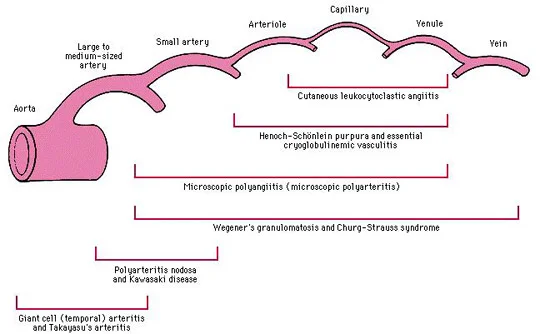
The Chapel Hill Consensus Conference classification system categorises vasculitis by the size of vessels primarily affected. Understanding the type helps guide treatment and prognosis.
Large Vessel Vasculitis
Giant Cell Arteritis (GCA)
LargeInflammation of the lining of arteries, most often those in the head, especially the temporal. Usually affects people over 50. Can cause severe headaches, jaw pain, and vision loss if untreated. Treated with high-dose corticosteroids.
Takayasu's Arteritis
LargeA rare form affecting the aorta and its major branches. Most common in young women, particularly in Asia. Can cause reduced blood flow to arms and legs. Close monitoring is critical during pregnancy for affected women.
Medium Vessel Vasculitis
Polyarteritis Nodosa (PAN)
MediumAffects medium-sized arteries and can damage the skin, kidneys, nerves, and intestines. Can be associated with hepatitis B. Symptoms include skin nodules, joint pain, and abdominal pain.
Kawasaki Disease
MediumPrimarily affects children under 5. Causes inflammation in the walls of medium-sized arteries, including coronary arteries, and can lead to heart complications if not treated promptly with IVIG and aspirin.
Small Vessel Vasculitis
Granulomatosis with Polyangiitis (GPA)
SmallPreviously known as Wegener's granulomatosis. Affects small and medium vessels, commonly in the nose, sinuses, lungs, and kidneys. An ANCA-associated vasculitis treated with immunosuppression.
Microscopic Polyangiitis (MPA)
SmallAffects small blood vessels, commonly in the kidneys and lungs. An ANCA-associated vasculitis that can cause rapidly progressive kidney disease and pulmonary haemorrhage requiring urgent treatment.
EGPA (Eosinophilic Granulomatosis)
SmallPreviously known as Churg-Strauss syndrome. Associated with asthma and high eosinophil count, affecting small to medium vessels. Managed with corticosteroids and biologics like mepolizumab.
IgA Vasculitis (Henoch-Schönlein)
SmallThe most common vasculitis in children. Causes palpable purpura (raised red-purple spots), joint pain, and can affect kidneys and intestines. Often self-limiting in children but may persist in adults.
Cryoglobulinemic Vasculitis
SmallAssociated with abnormal proteins (cryoglobulins) that clump in cold temperatures and damage small blood vessels. Often linked to hepatitis C infection. Presents with purpura, joint pain, and kidney disease.
Cutaneous Small Vessel Vasculitis
SmallPrimarily limited to the skin, causing palpable purpura, skin ulcers, and nodules. Often triggered by infections, medications, or systemic diseases. Usually self-limiting and managed conservatively.
Variable & Other Forms
Behçet's Disease
VariableCauses inflammation of blood vessels throughout the body. Characterised by recurrent oral and genital ulcers, eye inflammation (uveitis), and skin lesions. More common in Middle Eastern and Asian populations.
DADA2 Syndrome
VariableA rare genetic disorder involving mutations in the ADA2 gene causing enzyme deficiency, resulting in systemic inflammation and immune dysregulation. Can mimic PAN and cause strokes in young patients.
Cogan Syndrome
VariableA rare autoimmune disease characterised by eye inflammation (interstitial keratitis) and inner ear disease, potentially causing deafness. Can affect large vessels similar to Takayasu's arteritis.